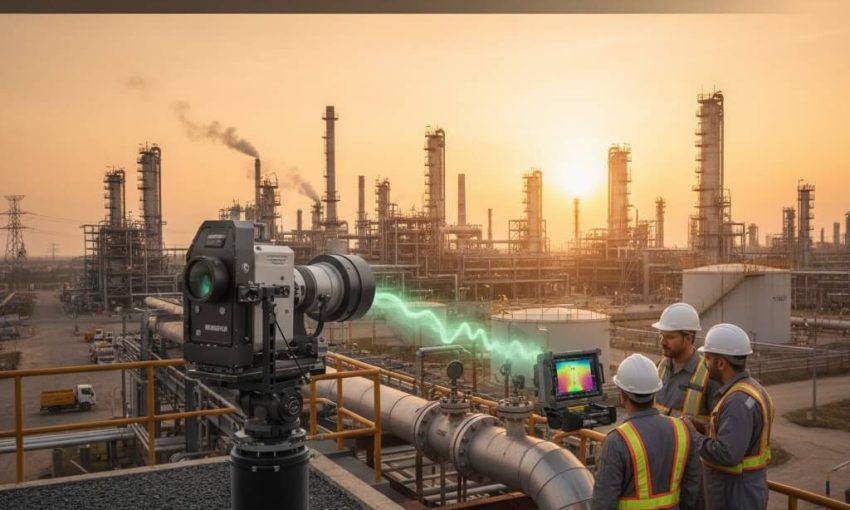
Introduction: Why Methane Cameras Matter Today
Methane emissions are no longer treated as an invisible operational side effect. Across energy, industrial, and utility sectors, methane has become a focal point for safety, efficiency, and environmental accountability. A methane camera enables organizations to directly visualize emissions that were previously difficult or impossible to confirm in real time.
What Is a Methane Camera?
A methane camera is a specialized imaging device designed to detect methane gas by capturing its unique infrared absorption characteristics. Unlike traditional sensors that rely on point measurements, methane cameras provide spatial context, allowing operators to see where leaks originate and how they spread.
Key features include:
-
Optical detection of methane gas
-
Non-contact inspection from a safe distance
-
Real-time visualization of emissions
-
Operation during normal facility activity
This visual approach improves both detection confidence and decision-making speed.
How Camera Leak Detection Works with Methane Cameras
Camera leak detection using methane cameras relies on thermal and spectral contrasts between methane and its background. When methane escapes from pressurized systems, it creates a visible plume under the camera’s imaging spectrum.
This method allows operators to:
-
Identify leak sources without physical contact
-
Inspect large areas efficiently
-
Reduce reliance on manual sniffing or handheld probes
-
Document leaks visually for follow-up and reporting
As a result, camera leak detection becomes more scalable and repeatable.
Industrial Applications of Methane Cameras
Oil and Gas Facilities
Methane cameras are widely used across upstream, midstream, and downstream operations to inspect valves, compressors, storage tanks, and pipelines. Camera leak detection supports faster LDAR programs and safer inspections.
Gas Utilities and Distribution Networks
In gas distribution environments, methane cameras enable rapid surveys of above-ground infrastructure, helping utilities detect leaks before they escalate into safety incidents.
Landfills and Biogas Plants
Methane cameras help identify emission hotspots across large surfaces, where traditional point sensors may miss diffuse leaks.
Industrial Manufacturing
Facilities that use methane as a fuel or feedstock benefit from camera leak detection by reducing product loss and improving operational efficiency.
Advantages Over Traditional Detection Methods
Compared to point-based sensors, methane cameras offer several advantages:
-
Visual confirmation of leaks
-
Faster inspection of complex systems
-
Reduced exposure to hazardous areas
-
Better documentation for audits and compliance
-
Improved prioritization of repair efforts
These benefits make camera leak detection more than a diagnostic tool, it becomes a management asset.
Safety and Operational Efficiency
Methane cameras enhance safety by allowing inspections from a distance, minimizing worker exposure to flammable or confined environments. At the same time, they reduce downtime by enabling inspections while systems remain operational.
This balance between safety and productivity is a key driver behind the adoption of methane camera technology.
Supporting Compliance and Environmental Goals
Visual evidence produced by methane cameras strengthens internal reporting and supports regulatory compliance initiatives. Camera leak detection records provide traceability, verification, and transparency for emissions management programs.
As methane regulations continue to evolve, documented detection workflows become increasingly valuable.
From Detection to Prevention
The real value of methane cameras lies not only in finding leaks, but in preventing them. By identifying recurring failure points and patterns, organizations can improve maintenance strategies and reduce future emissions.
Camera leak detection thus becomes a strategic tool for long-term operational improvement.
Turning Visibility into Control
Methane cameras represent a major step forward in gas detection technology. By enabling effective camera leak detection across complex industrial environments, they provide the visibility needed to act decisively, improve safety, and support sustainable operations.
In a world where methane accountability is rising, seeing the leak is the first step toward controlling it