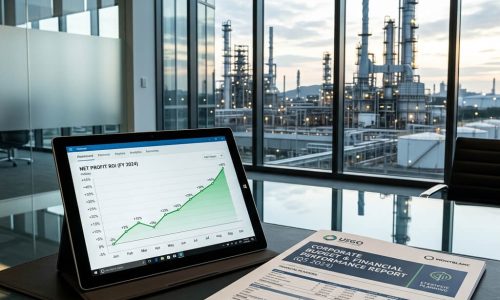
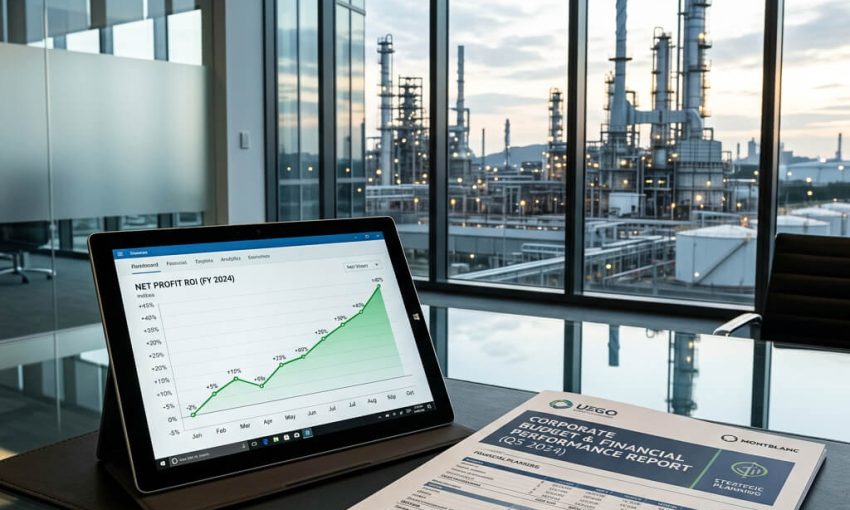
When evaluating Leak Detection and Repair (LDAR) infrastructure, a classic corporate friction frequently emerges: the Health, Safety, and Environment (HSE) department prioritizes technical precision and regulatory compliance, while the Chief Financial Officer (CFO) focuses on capital allocation and initial expenditure. In the current economic landscape, viewing a high-performance optical gas imaging system purely as a compliance cost is a significant financial mistake. This article provides a comprehensive financial blueprint that bridges the gap between engineering and finance. By analyzing the true variables behind premium ogi camera price metrics, we demonstrate how investing in ultra-high-sensitivity hardware yields a rapid, multi-fold infrared camera leak detection return on investment (ROI) through product loss prevention, tax mitigation, and operational downtime reduction.
The Procurement Dilemma: Upfront CAPEX vs. Invisible Revenue Loss
In the energy sector, capital expenditure (CAPEX) requests are subjected to intense scrutiny. When an HSE manager submits a proposal to standardize an asset fleet with premium, cooled-sensor optical gas imaging (OGI) technology, the immediate corporate hurdle is almost always the “sticker price.” Lower-tier, uncooled infrared devices or legacy sniffer probes appear drastically cheaper on a line-item purchase order, making them highly attractive to procurement teams focused on short-term budget boundaries.
However, evaluating an investment in infrared camera leak detection based solely on initial ogi camera price creates a profound financial blind spot.
A cheap or low-resolution camera is low-cost for a reason: it lacks the thermal sensitivity required to detect low-volume or low-contrast gas leaks. In the field, what the camera cannot see remains an active, continuous drain on the company’s balance sheet. Every hour an unresolved methane ($CH_4$) or volatile organic compound (VOC) leak vents into the atmosphere, valuable product is lost forever, and massive regulatory penalties accumulate. The true metric of success is not how much capital was saved during procurement, but how quickly the high-resolution dividend pays back the initial investment through absolute product recovery.
Deconstructing the Premium OGI Camera Price: What Are You Paying For?
To present a compelling business case to a financial executive, one must first explain the engineering realities that dictate the cost of professional-grade infrared camera leak detection hardware. A premium OGI camera is not a standard industrial tool; it is a highly specialized quantum-measurement device.
The Cooled Quantum Detector
The primary driver of a premium ogi camera price is the integration of a cooled mid-wave infrared (MWIR) detector, typically an Indium Antimonide (InSb) or a strained-layer superlattice (SLS) sensor. These detectors are mechanically integrated with a miniature Stirling cryocooler that drops the sensor’s internal operating temperature to approximately $-196^\circ\text{C}$ ($77\text{ Kelvin}$).
Cooling the sensor eliminates thermal “dark currents”—the internal electronic noise generated by the camera’s own molecular movement. This allows the camera to achieve a Noise Equivalent Temperature Difference (NETD) of less than 10mK ($0.01^\circ\text{C}$).
An uncooled camera, by contrast, operates at ambient temperature and has a much higher noise floor (often $>30\text{mK}$). In the field, this means a cooled premium camera can visualize minute gas density differentials that are completely invisible to uncooled alternatives.
+-------------------------------------------------------------+
|                     THE SENSITIVITY DIVIDEND                |
+-------------------------------------------------------------+
|  Premium Cooled OGI (<10mK NETD)   |  Captures Micro-Leaks  | --> Revenue Saved
+-------------------------------------------------------------+
|  Low-Tier Uncooled OGI (>30mK NETD) |  Misses Micro-Leaks    | --> Active Product Loss
+-------------------------------------------------------------+
Optical and Regulatory Certification
Premium pricing also accounts for structural and regulatory engineering. Industrial environments require Intrinsically Safe (IS) certification (Zone 2/Class I Div 2) to eliminate the camera as an ignition hazard, allowing operators to work without costly Hot Work Permits. Furthermore, compliance with the EPA’s strict Appendix K protocol requires rigorous manufacturing standards, automated calibration validation, and data-logging capabilities that cheaper hardware simply cannot deliver.
The Product Recovery Math: Turning Escaping Gas Into Sold Inventory
The most direct financial argument for a premium ogi camera price is the immediate conversion of lost emissions back into marketable product. Methane is not merely an environmental hazard; it is natural gas—the company’s primary revenue driver.
The Cumulative Cost of “Minor” Leaks
Consider a standard midstream compressor station or an upstream tank battery. A single leaking valve stem or regulator connection venting a modest 5 kilograms of methane per hour might seem inconsequential to an undisciplined eye. However, natural gas production operates 24/7/365.
If a low-resolution or uncooled camera misses just five of these micro-leaks across a large facility due to poor thermal sensitivity, the total unrecovered product reaches 219 metric tons annually. Based on standard market values for natural gas, allowing these invisible leaks to persist cost the facility tens of thousands of dollars in pure, unharvested commodity revenue.
A high-sensitivity infrared camera leak detection sweep identifies these leaks instantly, allowing maintenance crews to execute a simple fix (such as tightening a packing gland or replacing a seal) within minutes. The premium camera pays for its entire capital acquisition cost within a matter of months purely by shifting that escaping gas back into the sales pipeline.
The $1,500 Financial Shield: Mitigating the Methane Waste Emissions Charge
While product recovery provides a solid baseline for ROI, the current regulatory tax structure turns high-resolution OGI into an absolute financial shield. Under the finalized mandates of EPA Subpart W and the Greenhouse Gas Reduction Program, emissions are no longer an abstract compliance metric—they are a direct corporate tax.
The Cost of Blind Compliance
As we navigate 2026, the Methane Waste Emissions Charge has hit its regulatory maximum of $1,500 per metric ton of methane that exceeds statutory intensity thresholds.
If an operator saves $40,000 upfront by purchasing an inferior, low-sensitivity camera, but that camera misses a series of small leaks that aggregate to 50 metric tons over the fiscal year, the financial equation completely collapses:
The company “saved” $40,000 in initial CAPEX but paid an additional $75,000 in unnecessary taxes—a net corporate loss of $35,000 in the very first year. Investing in a premium ogi camera price ensures that the facility can leverage Quantitative OGI (QOGI) to accurately measure mass-flow rates, prove to regulators that leaks have been mitigated, and drive the facility’s taxable emission profile down to the absolute minimum.
Operational Efficiency: Eliminating the Hot Work Permit Bottleneck
The financial return on an infrared camera leak detection asset is also heavily driven by labor optimization and facility uptime.
The Labor Cost of Low-Tier Tech
Using manual, contact-based sniffer probes (Method 21) requires a technician to physically touch every single valve, flange, and connector in the facility. A facility with 10,000 components can take weeks to inspect manually, translating to thousands of hours in direct contract labor costs.
An OGI camera allows for “Smart Scanning.” A technician can stand on a catwalk and inspect hundreds of connections simultaneously from a safe distance. If a premium camera cuts the facility’s total survey time from 14 days down to 2 days, the labor savings alone over a multi-facility campaign yield an incredible operational return.
The Capital Value of Hot Permit Avoidance
Furthermore, standardizing on an Intrinsically Safe premium camera means technicians can walk directly into explosive atmospheres (Zone 1 and Zone 2) without shutting down processes or waiting hours for a Hot Work Permit to be cleared by safety managers. In a high-throughput refinery or petrochemical plant, preventing even one hour of process downtime or administrative delay can save more money than the entire purchase price of an elite OGI fleet.
A CFO-Ready Comparative Financial Model
To simplify the procurement process, the following comparative financial matrix maps the true Total Cost of Ownership (TCO) and ROI timeline of a low-cost alternative versus a premium Oled-MWIR OGI system over a standard 24-month operating horizon.
| Financial & Operational Metric | Entry-Level / Uncooled Camera | Premium Cooled OGI System |
| Initial CAPEX Purchase Price | Low ($) | Premium ($$$) |
| Minimum Detectable Leak Rate | $>15\text{ kg/hr}$ (Poor) | $<1\text{ kg/hr}$ (Elite) |
| Annual Product Loss (Gas Escaping) | High ($30,000 – $50,000) | Near Zero (Caught Instantly) |
| Subpart W Methane Tax Exposure | High Risk ($1,500/ton on missed gas) | Insulated (Empirical Quantification) |
| Hot Work Permit Downtime | High (Requires permit friction) | Zero (Intrinsically Safe) |
| Break-Even ROI Timeline | Indeterminate (Continuous leak drain) | 3 to 6 Months |
The Ultimate Business Case: Precision is Profits
When presenting to the executive suite, the narrative must shift from “environmental protection” to “asset optimization.” A premium ogi camera price should never be viewed as an expense; it is a high-yield capital investment that safeguards revenue, lowers tax liabilities, and cuts labor overhead.
In the strict regulatory and financial climate of 2026, a camera that misses a leak is the most expensive piece of equipment a company can own. Choosing inferior tech to save a few thousand dollars upfront is an operational gamble that guarantees long-term financial leakage.
Standardize your infrastructure with the absolute pinnacle of optical precision. Contact Opgal today to receive a customized corporate ROI calculation for your assets, and arm your executive team with the empirical ground truth needed to transform regulatory compliance into long-term corporate profitability.