Introduction
Leak detection has become a critical priority across industrial sectors, from energy and power generation to chemical processing and manufacturing. Even small, undetected leaks can lead to safety hazards, energy loss, environmental damage, and regulatory exposure. Traditional inspection methods often rely on point sensors, manual checks, or pressure testing, which may miss hidden or intermittent issues.
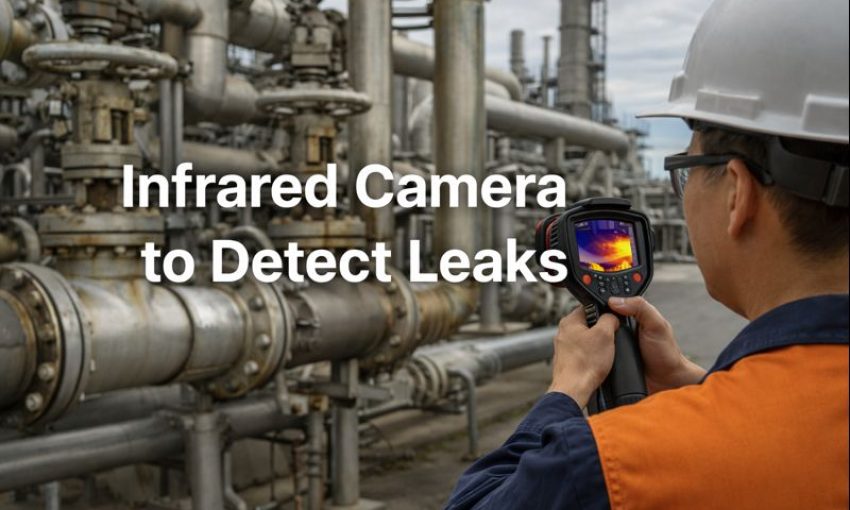
An infrared camera to detect leaks offers a fundamentally different approach. Instead of measuring gas or fluid concentration at a single point, infrared imaging visualizes temperature and emission anomalies across entire systems. When combined with a thermal camera to find leaks, operators gain a fast, non-contact, and highly effective way to locate leaks before they escalate into failures.
What Is an Infrared Camera to Detect Leaks
An infrared camera detects differences in thermal radiation emitted by objects and surfaces. Leaks often create measurable temperature changes due to pressure release, phase change, evaporation, or heat transfer. These changes appear as clear visual patterns in infrared imagery.
An infrared camera to detect leaks can identify:
-
Gas leaks that cool or heat surrounding air
-
Steam leaks in pressurized systems
-
Fluid leaks that alter surface temperature
-
Insulation failures caused by hidden moisture
-
Air leaks affecting thermal balance
Unlike conventional tools, infrared imaging reveals problems that cannot be seen with the naked eye.
How Thermal Imaging Reveals Leaks
A thermal camera to find leaks works by converting infrared radiation into a visible image based on temperature variation. When a leak occurs, it typically creates one or more of the following effects:
-
Cooling from gas expansion
-
Heating from friction or compression
-
Evaporative cooling from liquids
-
Uneven heat distribution along pipes or valves
-
Thermal contrast caused by wet or damaged insulation
These effects create distinct thermal signatures, allowing inspectors to locate leaks quickly and accurately.
Industrial Applications of Infrared Leak Detection
Power Generation Facilities
Power plants rely on high pressure steam, cooling water, and fuel systems. Infrared cameras help detect:
-
Steam leaks in turbines and boilers
-
Insulation breakdown on hot pipes
-
Cooling system leaks
-
Valve and flange failures
Early detection prevents energy loss, equipment damage, and unplanned outages.
Oil, Gas, and Energy Infrastructure
In upstream and midstream operations, leaks can be hazardous and costly. An infrared camera to detect leaks supports:
-
Pipeline inspection
-
Compressor station monitoring
-
Tank and valve surveys
-
Detection of pressurized gas releases
Thermal imaging allows inspections from safe distances, reducing worker exposure.
Chemical and Process Industries
Chemical plants handle volatile and corrosive substances. Thermal imaging helps identify:
-
Leaks in transfer lines
-
Heat exchanger failures
-
Reactor jacket issues
-
Pump seal degradation
Using a thermal camera to find leaks improves safety and process stability.
Manufacturing and Industrial Facilities
Manufacturing environments depend on compressed air, hydraulics, and controlled temperatures. Infrared cameras detect:
-
Compressed air leaks
-
Hydraulic oil seepage
-
Cooling line blockages
-
HVAC inefficiencies
This leads to lower operating costs and improved production reliability.
Advantages Over Traditional Leak Detection Methods
Compared to point sensors and manual inspections, infrared imaging offers clear advantages.
Wide area coverage
An infrared camera scans large sections of equipment in seconds, not minutes.
Non-contact and safe
Inspections are performed without touching hot, pressurized, or hazardous components.
Real time visualization
Leaks are visible immediately, allowing faster decision making.
No shutdown required
Most inspections can be performed during normal operation.
Early fault detection
Small leaks and early stage failures are identified before they worsen.
Infrared vs Thermal Cameras: Understanding the Relationship
In practice, infrared and thermal cameras are closely related. All thermal cameras operate in the infrared spectrum, but not all infrared cameras are optimized for leak detection.
An infrared camera to detect leaks is typically designed with:
-
High thermal sensitivity
-
Accurate temperature measurement
-
Industrial-grade calibration
-
Software for anomaly analysis
A thermal camera to find leaks focuses specifically on identifying thermal contrasts associated with leakage events. In many industrial systems, the two functions are combined in a single device.
Best Practices for Using Infrared Cameras to Detect Leaks
To maximize detection accuracy, operators should follow proven inspection practices.
-
Inspect during stable operating conditions
-
Scan from multiple angles
-
Account for reflective surfaces
-
Compare thermal images over time
-
Document findings with visual records
-
Combine infrared data with maintenance logs
Training and experience further improve interpretation accuracy and reduce false positives.
Supporting Compliance and Preventive Maintenance
Infrared imaging supports regulatory and operational goals by providing documented evidence of inspections and repairs. Thermal images can be stored, time-stamped, and used to verify corrective actions.
Industries benefit from:
-
Reduced downtime
-
Improved safety records
-
Lower energy losses
-
Stronger compliance with environmental and safety standards
-
Data-driven maintenance planning
An infrared camera to detect leaks becomes a key tool in preventive maintenance strategies.
Turning Invisible Leaks into Actionable Insight
Industrial leak detection is no longer limited to manual checks and reactive repairs. An infrared camera to detect leaks, supported by a thermal camera to find leaks, delivers faster detection, higher accuracy, and improved safety across industrial environments.
By visualizing hidden thermal anomalies, operators can prevent failures, protect personnel, reduce emissions, and optimize performance. As industries continue to modernize, infrared and thermal imaging are becoming essential tools for reliable and responsible operations.
Frequently Asked Questions About Infrared Leak Detection
What leaks can an infrared camera detect?
An infrared camera detects gas, steam, air, water, oil, and refrigerant leaks by identifying abnormal thermal patterns.
How does a thermal camera help find industrial leaks?
Thermal cameras visualize temperature differences caused by leaking fluids or gases, enabling fast, non-contact inspections.
Is infrared leak detection safe in hazardous environments?
Yes. Inspections can be performed from a distance, reducing exposure to heat, pressure, or hazardous substances.
Can inspections be done without shutting down systems?
Yes. Infrared cameras allow leak detection while equipment remains fully operational.
Is thermal imaging suitable for preventive maintenance?
Absolutely. It helps identify early-stage leaks before failures or safety incidents occur.