Using gas cameras and leak detection cameras to protect workers, prevent accidents, and strengthen regulatory compliance
Introduction: Safety at the Frontline of Industrial Operations
High-risk industrial zones – including refineries, petrochemical plants, offshore platforms, power generation facilities, chemical processing units, and manufacturing complexes – operate under continuous pressure. Highly flammable gases, toxic compounds, high temperatures, and complex machinery create an environment where even minor leaks may lead to catastrophic consequences.
As industries evolve, so does their approach to safety. Modern facilities now rely on advanced visual detection tools such as the gas camera and leak detection camera, transforming how hazards are identified, monitored, and mitigated. These technologies move workers out of harm’s way, improve risk awareness, enhance regulatory compliance, and create a proactive safety culture based on real-time insights.
This article explores how gas cameras strengthen safety and compliance in hazardous industrial environments – and why they are quickly becoming indispensable in the era of smart monitoring and digital transformation.
What Is a Gas Camera?
A gas camera is an advanced imaging device that detects and visualizes gas emissions that are invisible to the naked eye. Using infrared or OGI (Optical Gas Imaging) technology, a gas camera can identify hydrocarbons, methane, VOCs, SF6, refrigerants, and other industrial gases as clear, visible plumes in real time.
Gas cameras enable:
- Remote detection of hazardous leaks
- Identification of gas emissions before alarms trigger
- Wide-area scanning without physical contact
- Real-time situational awareness
What Is a Leak Detection Camera?
A leak detection camera is a specialized tool designed to identify any kind of gas, vapor, or pressurized fluid leak. While similar to a gas camera, it may also detect:
- Air leaks
- Steam leaks
- Refrigerant leaks
- Hydraulic leaks
- Thermal loss or insulation failure
Together, gas cameras and leak detection cameras create a powerful detection ecosystem that strengthens industrial safety in ways traditional sensors cannot match.
Enhancing Worker Safety Through Remote Monitoring
High-risk industrial zones often require workers to approach hazardous equipment to inspect for leaks manually. This creates unnecessary exposure to:
- Toxic gases
- Flammable atmospheres
- High-pressure systems
- Extreme temperatures
- Confined spaces
- Explosive environments (ATEX zones)
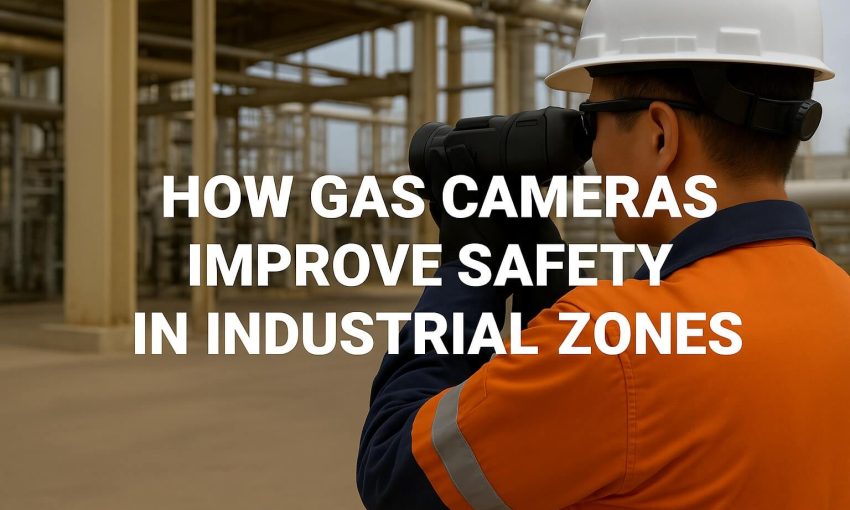
Using a gas camera, technicians can inspect dangerous areas from a safe distance – sometimes tens or hundreds of meters away.
How Remote Detection Protects Workers
- No need to climb towers or scaffolding
- No exposure to hot lines, steam, or pressurized valves
- No entry into confined spaces
- Reduced risk of exposure to carcinogens or corrosive gases
- Fewer personnel in hazardous zones during operations
Gas cameras significantly reduce the number of risky interventions, transforming inspections into remote visual assessments that take seconds rather than hours.
Real-Time Hazard Alerts and Early Warning Capabilities
Traditional gas sensors measure concentration levels at specific points. They cannot see leaks, nor can they scan an area. A leak detection camera, on the other hand, provides immediate visual confirmation of a leak’s:
- Source
- Size
- Direction
- Speed of dispersion
- Potential escalation risk
Real-time alerts improve emergency response by:
- Allowing faster shutdown decisions
- Identifying ignition hazards
- Locating hidden leaks before pressure drops occur
- Preventing equipment overheating or rupture
- Supporting firefighting and emergency crews
Modern gas cameras integrate with facility control systems, triggering alarms, push notifications, or automatic shutdown procedures when hazards appear.
Remote, Autonomous, and Continuous Monitoring
High-risk zones are adopting autonomous leak detection as part of Industry 4.0 initiatives. Gas cameras can be mounted on:
- Fixed surveillance towers
- Pan-tilt-zoom (PTZ) units
- Robotic inspection platforms
- Autonomous vehicles
- Drones
Benefits of autonomous gas-camera monitoring:
- 24/7 leak detection without workforce exposure
- Automated scanning patterns
- Integration with AI analytics
- Real-time plume quantification
- Continuous compliance documentation
Tank farms, compressor stations, offshore rigs, and hydrogen facilities benefit greatly from autonomous monitoring, where human access is limited or dangerous.
Strengthening Compliance with EPA, OSHA, ISO, and OHS Standards
Compliance requirements for high-risk industrial zones are becoming stricter every year. Standards such as:
- EPA OOOOb / OOOOc
- EPA Subpart W (GHGRP)
- Appendix CAM – Continuous Monitoring
- OSHA 1910
- ISO 45001 Occupational Safety
- ISO 14001 Environmental Management
All emphasize early detection, hazard prevention, safe work practices, and documentation.
A gas camera supports compliance by providing:
- Visual proof of leak detection
- Time-stamped inspection records
- Documented repair verification
- Long-range and non-contact inspection capability
- Integration with emissions reporting systems
Unlike handheld sniffers or sensors, leak detection cameras align directly with the EPA’s push for real-time monitoring, transparency, and verifiable imaging data.
Detecting Leaks That Conventional Sensors Cannot Identify
Point-based gas sensors are essential but limited. They detect leaks only if gas reaches them at a certain concentration. They cannot:
- Pinpoint leak origins
- Visualize leak direction
- Detect small intermittent leaks
- Cover wide or outdoor areas
- Identify thermal anomalies or insulation failure
A leak detection camera overcomes these limitations with:
- Wide scanning coverage
- Instant visualization
- No blind spots
- Ability to inspect insulated or hard-to-reach equipment
- Detection across long distances
This becomes crucial in high-risk zones where even micro-leaks create severe hazards.
Reducing Downtime and Maintenance Costs
Unplanned shutdowns are costly. A gas camera enables predictive maintenance by catching problems early:
- Valve packing wear
- Seal degradation
- Corrosion
- Overheating equipment
- Pressure anomalies
- Vapor releases
- Steam or air leaks
Detecting leaks visually supports better maintenance planning, prevents failures, and reduces operational costs.
Improving Emergency Preparedness and Incident Investigation
A gas camera provides critical data before and after safety incidents.
Before an incident:
- Detects anomalies during routine monitoring
- Highlights potential ignition points
- Gives supervisors data to halt operations proactively
After an incident:
- Helps locate the source of a release
- Assists in root-cause analysis
- Provides visual evidence for compliance reports
- Supports insurance and legal documentation
This strengthens both safety culture and regulatory credibility.
Supporting AI-Based Risk Analytics and Smart Plants
Modern leak detection cameras integrate with:
- AI-based plume recognition
- Machine learning models
- Digital twins
- IoT monitoring systems
- Predictive analytics dashboards
- SCADA and historian systems
AI can analyze gas camera video in real time to:
- Identify leak types
- Estimate emission rates
- Detect recurring patterns
- Predict future failures
- Rank risk levels automatically
This transforms a gas camera from a visual tool into a smart data engine for industrial risk management.
Gas Cameras Are Redefining Industrial Safety
In high-risk industrial zones, traditional detection tools are no longer enough. Workers need visual clarity. Supervisors need real-time alerts. Compliance teams need verifiable data. Operators need automation and continuous coverage.
A gas camera and leak detection camera deliver all of this – combining advanced imaging, remote monitoring, and AI-driven intelligence to prevent accidents before they happen.
By adopting gas cameras, facilities gain:
- Safer work environments
- Faster hazard identification
- Stronger compliance performance
- Lower operational risk
- Improved emergency response
- Modernized Industry 4.0 capabilities
In environments where one leak can threaten lives, the power of visual detection is not optional – it is essential.