
The Shield of Certainty: Constructing a Defensible Verification Protocol for Modern Emissions Audits
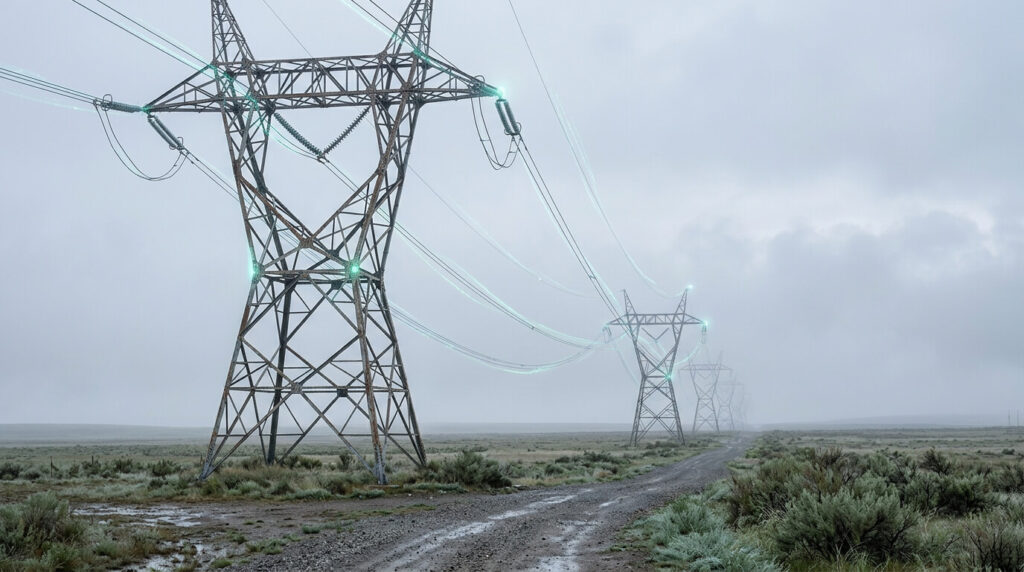
The operational and regulatory framework of the energy industry is undergoing its most profound structural shift in a generation. For decades, operators could manage environmental compliance as a series of administrative checklist items, largely disconnected from daily field activities. However, as regulatory authorities integrate direct measurement protocols into federal greenhouse gas reporting programs, the margin […]
The Price of Venting: Measuring the Direct Financial Return on Optical Gas Imaging

Within the modern petrochemical and refining sectors, fugitive emissions are no longer treated as simple, unavoidable side-effects of high-pressure fluid dynamics. Every molecule of hydrocarbon that escapes a packing gland, a flange, or a relief valve represents a direct and immediate erosion of operational profitability. While environmental regulations have forced many organizations to establish basic […]
The Automation Audit: How Machine Learning Restructures Clean Air Act Compliance

The integration of advanced computation into federal oversight has fundamentally altered how industrial facilities demonstrate environmental compliance. For decades, compliance was a manual, cyclical process centered around periodic inspections, paper logs, and physical point-source measurements. However, as regulatory bodies deploy sophisticated algorithmic models, the modern energy sector faces an automated auditing environment. This shift represents […]
The High-Resolution Dividend: How Premium OGI Camera Price is Offset by Rapid Leak Detection ROI

When evaluating Leak Detection and Repair (LDAR) infrastructure, a classic corporate friction frequently emerges: the Health, Safety, and Environment (HSE) department prioritizes technical precision and regulatory compliance, while the Chief Financial Officer (CFO) focuses on capital allocation and initial expenditure. In the current economic landscape, viewing a high-performance optical gas imaging system purely as a […]
The Audit-Proof Flare: Using Thermal Imaging to Detect Leaks and Satisfy Appendix CAM Mandates

In the downstream petrochemical sector, the industrial flare stack represents both the ultimate safety valve and the highest-risk compliance target. Under the EPA’s Compliance Assurance Monitoring (CAM) regulations, refineries must provide continuous, empirical verification that their emission control systems are operating at optimal destruction efficiency. Traditional monitoring methods, such as thermocouples and inferential flow calculations, […]
The Legacy Liability: Why NSPS OOOOa Facilities Need Modern OGI Upgrades Before 2027

For nearly a decade, facilities operating under the NSPS OOOOa framework enjoyed a relatively predictable, checklist-driven compliance environment. However, as we head through 2026, the regulatory landscape has experienced a dramatic technological shift. The coexistence of legacy OOOOa standards alongside the high-definition requirements of EPA OOOOb/c has created a dangerous compliance loophole—one that is currently […]
Ground Truth vs. The Eye in the Sky: Using OGI to Validate and Challenge Third-Party Super Emitter Claims
The year 2026 marks a definitive shift in the sovereignty of industrial data. The implementation of the EPA OOOOb Super Emitter Response Program (SERP) has effectively “democratized” environmental enforcement, allowing third-party entities to monitor methane ($CH_4$) emissions from orbit. However, space-based detection is inherently prone to a “Resolution Gap”—a technical margin of error that can […]
From Vision to Volume: The Strategic Shift from Detection to Empirical QOGI Quantification
The regulatory landscape of 2026 has officially moved beyond the era of “find and fix.” With the finalization of the EPA Subpart W revisions and the escalation of the Methane Waste Emissions Charge to $1,500 per metric ton, simply visualizing a leak is no longer enough to protect a facility’s bottom line. The industry is […]
Beyond Methane: The Versatility of OGI in Petrochemical VOC Monitoring
While the global regulatory conversation has been dominated by methane mitigation in the upstream sector, the downstream petrochemical and refining industries face a far more complex challenge. In these high-density environments, leak detection is not just about a single gas—it is about managing a cocktail of Volatile Organic Compounds (VOCs), aromatics, and heavy hydrocarbons. This […]
The Regulatory Great Reset: From the Legacy of NSPS OOOOa tFWEo the AI-Enforced Era of EPA OOOOb/c and Subpart W
The global energy sector is currently navigating a “Regulatory Great Reset.” For over a decade, the industry operated under the foundational but limited framework of NSPS OOOOa, a regulation that focused primarily on new or modified assets and relied on prescriptive, manual detection methods. However, as we head through 2026, that era is officially over. […]